


How to Style a Small Living Room So It Feels Bigger

Welcome to our store! Discover amazing deals and top products today.
A small living room has to work hard. It's where you relax, watch TV, have friends over and maybe even fold laundry. The good news is that a small space doesn't need expensive renovations to feel bigger and more comfortable. It needs a clear layout, a little restraint and a few smart choices in fabric, light and color. Here's how to style a small living room so it feels open, cozy and like you.

Start with the layout, not the decor
Before you buy a single pillow, figure out how you actually use the room. Where do people sit? Where does the TV go? What's the path from the door to the rest of the house? In a small room, a clear walkway matters more than any accessory.
- Float the sofa if you can. Pushing every piece against the walls can leave an awkward empty middle. Pulling the sofa a few inches off the wall often makes the room feel more relaxed.
- Choose one main seat. A sofa plus one chair is usually enough. Extra seating can be a pouf or a bench that tucks away.
- Keep walkways clear. Leave enough space to walk around the coffee table without turning sideways.
Let in as much light as possible
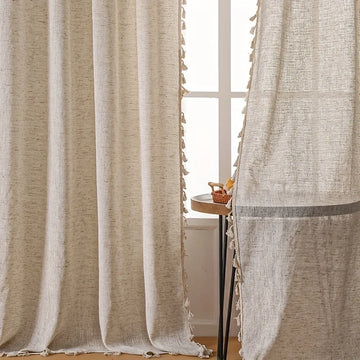
Natural light is the cheapest way to make a room feel bigger. Heavy, dark drapes can swallow a small window, while light, airy curtains let daylight spill in and still give you some privacy from the street.
A white sheer voile curtain panel softens harsh sun and keeps the room bright. Two styling tricks make windows look larger:
- Hang the rod high. Mounting it closer to the ceiling than the top of the window frame draws the eye up and makes the ceiling feel taller.
- Go wide. Extend the rod past the window on each side so open curtains sit against the wall, not over the glass.
If you need darkness for movie nights, layer sheers in front of blackout panels on a double rod. You get light during the day and privacy at night.
Make the sofa work for the room
The sofa is the biggest thing in most living rooms, so it sets the tone. In a small space, a sofa with slim arms and raised legs looks lighter than a bulky one that sits right on the floor, because you can see more floor underneath.

Not ready to replace yours? A slipcover can change its color and hide wear in minutes. A stretch jacquard sofa cover hugs the arms, back and seat for a snug fit, comes off for the washing machine, and is a practical choice for homes with pets and kids. Choosing a cover close to your wall color helps the sofa blend in, which makes the room feel calmer and less crowded.
Keep the color palette simple
Small rooms look best with a short list of colors. Pick a light base (white, cream, warm gray or soft beige) for the walls and big furniture, then add one or two accent colors through pillows, a throw and art. Repeating the same accent color two or three times around the room ties everything together.
That doesn't mean everything has to be white. A deep green or navy accent wall can actually make a small room feel cozy and intentional. The key is keeping the rest of the room quiet so the color has space to shine.
Add texture instead of more stuff
When a small room feels flat, the instinct is to add more things. Try adding texture instead. Different fabrics make a room feel layered and finished without filling every surface.

Pillows: fewer, better
Two to four pillows on a small sofa is plenty. Mix one textured fabric with one smooth one. A boucle throw pillow cover has a soft, nubby texture that looks modern next to velvet or linen-look covers. A long lumbar pillow in the middle breaks up a row of squares and takes up less room.
One great throw
A throw blanket folded over the arm of the sofa adds warmth and color, and it's genuinely useful on cold nights. A chenille knit throw blanket with a simple check pattern brings chunky texture without looking busy. Keep a second throw in a basket by the sofa instead of piling several on the cushions.
Use mirrors and art to open things up
A large mirror across from or beside a window bounces light around the room and adds a sense of depth. For art, one larger piece usually looks better in a small room than a crowded gallery wall. Hang art so the center sits at roughly eye level, and when it's above the sofa, keep it close to the back of the sofa so they read as one group.
Pick furniture that does double duty
In a small living room, every piece should earn its spot:
- A storage ottoman can be a coffee table, extra seat and blanket bin.
- Nesting side tables tuck away when you don't need them.
- A narrow console behind the sofa gives you a place for lamps and keys without taking floor space.
- Wall shelves keep books and plants off the floor.
Layer your lighting
One overhead light makes any room feel smaller and flatter. Aim for light at three levels: the ceiling light, a floor lamp in one corner, and a table lamp near the sofa. Warm bulbs make the room feel cozy in the evening, and lighting the corners pushes the walls out visually.
Edit often
The last step is the one most people skip: take things away. Clear the coffee table down to a tray, a plant and one or two books. Rotate decor by season instead of displaying everything at once. A small room with fewer, well-chosen pieces always feels bigger than one that's packed full.
Ready to refresh your space? Shop our living room decor collection for throw blankets, pillow covers, sofa covers and curtains. Shipping is free on every US order.
Image Gallery
Inspirational Lifestyle Note
Fashion is not merely about what you wear; it is an unspoken declaration of your personal identity. A masterfully curated piece of color-block knitwear is the ultimate testament to a woman's confidence and modern aesthetic intelligence.
Current Top Sellers
Shop now and enjoy deals!
Current Top Sellers